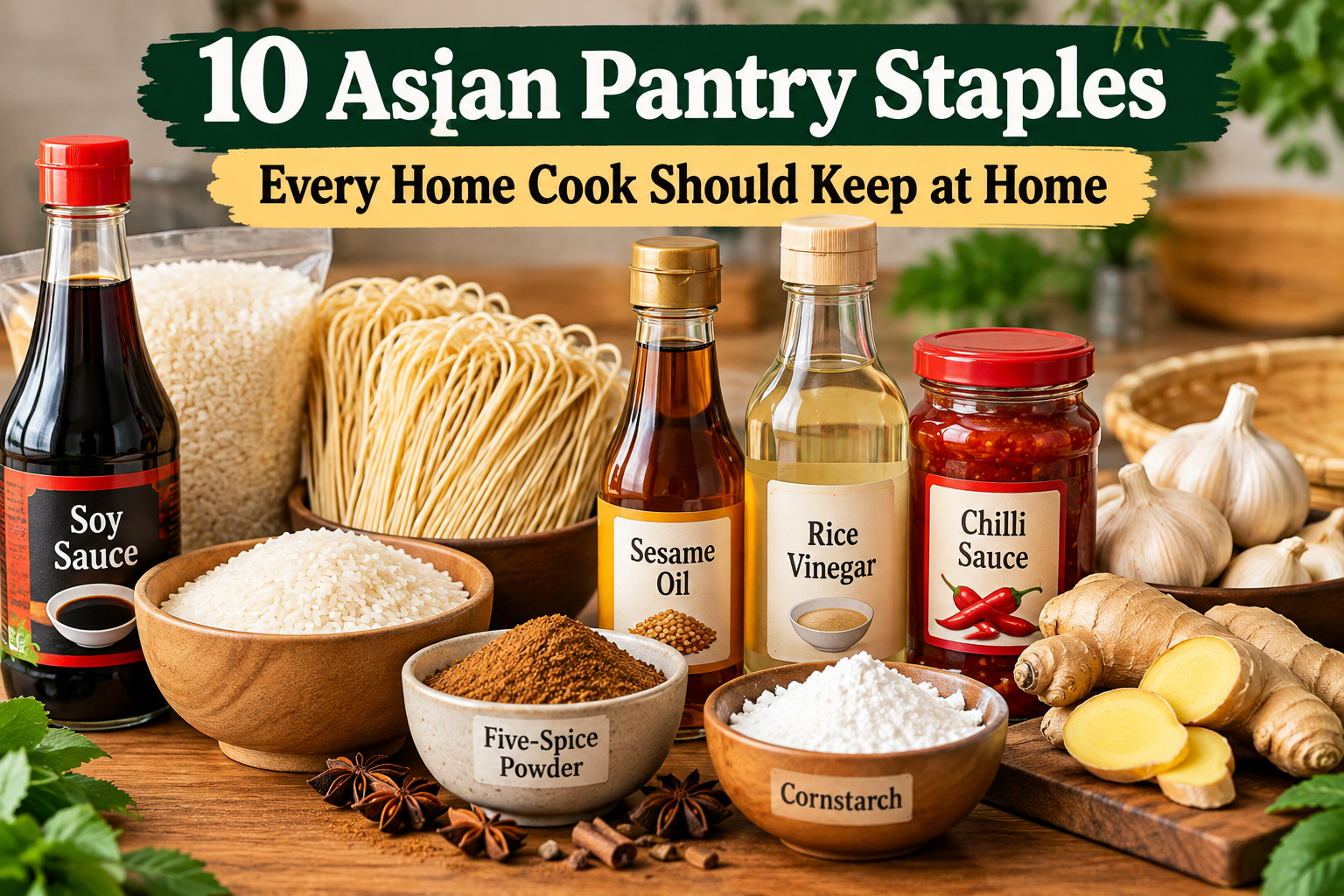
10 Asian Pantry Staples Every Home Cook Should Keep at Home
Asian cooking can look complicated when you first start exploring it. There are different sauces, noodles, spices, oils, seasonings and ingredients that may not be part of your usual grocery list.
But the good news is that you don’t need a huge collection of ingredients to start making delicious Asian-inspired meals at home.
A small, well-stocked pantry can take you surprisingly far. With a few dependable staples, you can make quick stir-fries, noodle dishes, fried rice, soups, marinades and plenty of easy weeknight meals without running to the shops every time you cook.
If you’re building your Asian pantry for the first time, these are 10 ingredients worth having around.
1. Soy Sauce
Soy sauce is one of the easiest places to start.
It brings saltiness, colour and a deep savoury taste to food. A small splash can completely change a simple stir-fry or bowl of noodles.
You can use soy sauce with vegetables, chicken, beef, tofu, fried rice and noodles. It also works well in marinades and dipping sauces.
There are different varieties available, including light and dark soy sauces. Light soy sauce is commonly used for seasoning, while dark soy sauce is often chosen when you want deeper colour and a richer flavour.
If you’re new to Asian cooking, having one everyday soy sauce in the pantry is a very useful first step.
2. Rice
Rice is one of those pantry staples that rarely goes to waste.
It works as a simple side dish, the base of a rice bowl or the starting point for fried rice. Different types of rice can also give you different textures and flavours.
For everyday meals, keeping a bag of your preferred Asian rice at home makes dinner planning much easier.
Leftover cooked rice is especially useful. Instead of throwing it away, you can turn it into fried rice with vegetables, egg, meat or tofu.
A little soy sauce, some vegetables and leftover rice can become a complete meal in a short time.
3. Noodles
A good supply of noodles can save dinner on a busy evening.
There are many types to choose from, including instant noodles, rice noodles, wheat noodles and other regional varieties. Each one works differently, so it can be fun to try a few and find your favourites.
Noodles are also very flexible.
You can stir-fry them with vegetables, add them to soup or serve them with meat and a simple sauce. Even when the fridge looks a little empty, noodles can usually help you put together something satisfying.
For a busy household, keeping two or three noodle varieties in the pantry is a smart idea.
4. Sesame Oil
Sesame oil is usually used in smaller amounts, but it can add a lot of flavour.
Its nutty aroma works particularly well in noodles, fried rice, stir-fries and homemade sauces. A few drops added near the end of cooking can give a dish a noticeable boost.
Because sesame oil has a strong flavour, you don’t need to use a lot.
It is also handy for making quick dressings. Mix it with soy sauce, a little vinegar and other seasonings for a simple sauce that can be used with noodles or vegetables.
5. Rice Vinegar
Rice vinegar is another useful ingredient for balancing flavours.
It has a mild acidity that can brighten sauces, salads, noodles and marinades. If a dish tastes a little too salty or heavy, a small amount of vinegar can sometimes help balance it.
Rice vinegar can also be combined with soy sauce and sesame oil to make a quick dressing.
You don’t need complicated recipes. A simple mixture of a few pantry ingredients can be enough to create a tasty sauce for vegetables, noodles or rice.
6. Chilli Sauce
For people who enjoy a little heat, chilli sauce deserves a place in the pantry.
There are many styles available, from sweet chilli sauces to hot chilli pastes and other spicy condiments. The right choice depends on the type of food you enjoy.
Chilli sauce can be added to noodles, dumplings, stir-fries, fried rice and dipping sauces.
The best part is that you can control how much you use. Start with a small spoonful and add more if you want extra heat.
It can also turn a very simple meal into something much more exciting.
7. Garlic
Fresh garlic might not seem like a pantry ingredient, but it is one of the most useful things to keep in the kitchen.
Garlic is a common starting point for many Asian-inspired dishes. It works beautifully with vegetables, meat, seafood, noodles and sauces.
Chopping or crushing fresh garlic before cooking releases its aroma and gives your food a much stronger flavour.
If you cook often, buying garlic regularly is worthwhile. It is inexpensive, versatile and can be used across many different cuisines, not just Asian food.
8. Ginger
Fresh ginger is another ingredient that can make a big difference.
Its warm, slightly spicy flavour works especially well in stir-fries, soups, marinades and sauces. Ginger pairs nicely with garlic, soy sauce and sesame oil, making these ingredients a useful combination for quick meals.
You don’t need much ginger for most recipes.
A small piece can be grated, sliced or finely chopped depending on the dish. It can also be stored in the freezer if you don’t use it quickly.
Having ginger available means you can add extra flavour without needing a long list of ingredients.
9. Five-Spice Powder
Five-spice powder is a handy seasoning for anyone who wants to explore more Asian-style cooking.
It has a distinctive aromatic flavour and is commonly associated with Chinese cooking. The exact flavour can vary between blends, but it often brings warm, sweet and savoury notes to dishes.
It can be used with meat, roasted vegetables and marinades.
Because the flavour is quite noticeable, start with a small amount. You can always add more, but it is harder to fix a dish after adding too much.
A small jar can last quite a while, making it a useful addition to a growing spice collection.
10. Cornstarch
Cornstarch may not be the first ingredient people think about when building an Asian pantry, but it is surprisingly useful.
It can help thicken sauces and create a glossy texture in stir-fries. It can also be used when preparing certain meat dishes where a light coating is needed.
One simple trick is to mix cornstarch with a little cold water before adding it to a hot sauce. This helps prevent lumps.
Once you start making stir-fries at home, you’ll probably find yourself reaching for it more often.
How to Build Your Asian Pantry Without Buying Everything
You don’t need to buy all 10 ingredients at once.
Start with the basics you know you’ll use. Soy sauce, rice, noodles, sesame oil and chilli sauce are a practical starting point. From there, add vinegar, spices and other ingredients as you become more comfortable cooking.
It is also worth remembering that Asian cuisine covers a huge range of countries and cooking traditions. The ingredients used in Chinese, Japanese, Korean, Thai, Vietnamese, Filipino and other cuisines can be very different.
So think of your pantry as something that grows over time.
Try one new ingredient, cook with it a few times and then decide whether it deserves a permanent spot in your kitchen.
Easy Meals You Can Make With These Staples
Once you have a few of these ingredients, everyday cooking becomes much easier.
For example, noodles, soy sauce, sesame oil, garlic and vegetables can become a quick noodle stir-fry. Rice, soy sauce, egg and leftover vegetables can turn into fried rice.
You can also combine soy sauce, rice vinegar, sesame oil and chilli sauce to create a simple dipping sauce.
Add ginger and garlic to a marinade, or use five-spice powder to give meat or vegetables a warmer flavour.
The point isn’t to follow complicated recipes every night. These pantry staples give you a foundation that lets you improvise.
Keep Your Pantry Simple
A well-stocked Asian pantry isn’t about having dozens of bottles and packets sitting on the shelves.
It is about having a handful of ingredients that work together.
Soy sauce adds savoury depth. Sesame oil brings aroma. Rice vinegar adds acidity. Chilli sauce provides heat. Garlic and ginger build flavour. Rice and noodles give you an easy base for a meal.
Once these ingredients become familiar, you can start experimenting with different combinations and recipes.
That is when home cooking gets more interesting.
Instead of wondering what to make for dinner, you can look at what you already have and create something from it.
For anyone starting to explore Asian cooking, these 10 pantry staples are a practical place to begin. They are versatile, easy to use and can help turn simple ingredients into meals with plenty of flavour.