Fast food is quick, convenient and often hard to resist. Whether it is a burger with fries, a crispy chicken sandwich or a pizza meal, these foods can add up to quite a few calories without looking like a huge amount of food.
So, how many calories are in a typical fast food meal?
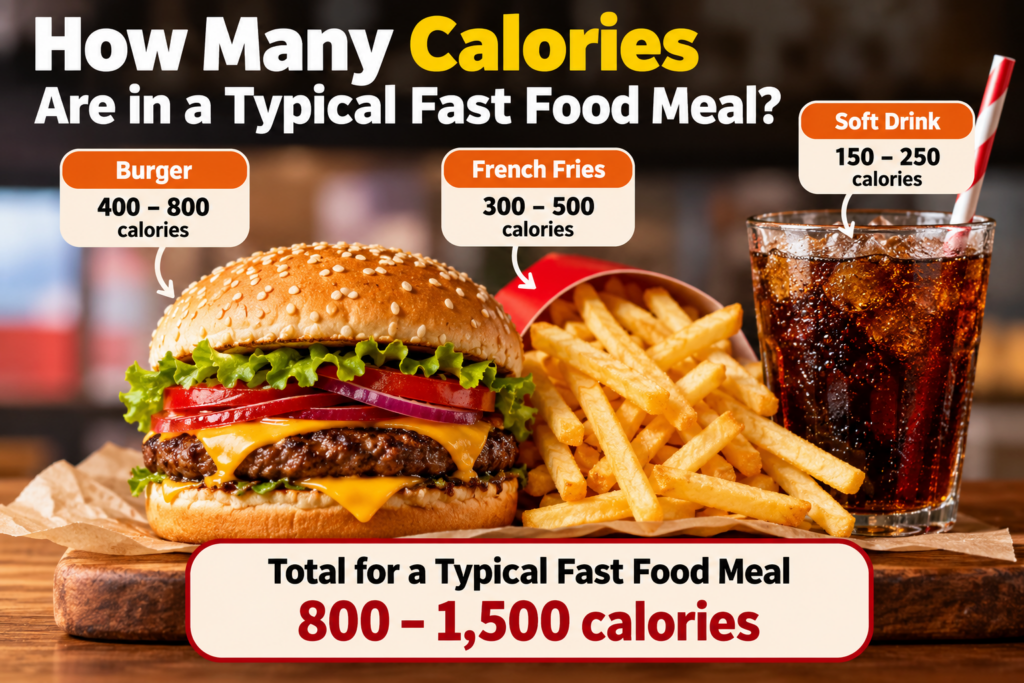
For many common fast food meals, the total can land somewhere between 800 and 1,500 calories. Some lighter choices may be closer to 500 or 600 calories, while large burgers, oversized fries, sugary drinks and desserts can push a single meal well beyond 1,500 calories.
The exact number depends on the restaurant, portion size and what you order. A simple burger can have a very different calorie count from a double burger loaded with cheese and sauces. The same is true for fries and drinks.
Understanding where the calories come from can make it easier to enjoy fast food while still keeping an eye on your overall diet.
What Counts as a Typical Fast Food Meal?
When people talk about a fast food meal, they usually mean a main item, a side and a drink. A classic example is a burger, medium fries and a soft drink.
A rough calorie breakdown might look like this:
- Burger: 400 to 800 calories
- Medium fries: 300 to 500 calories
- Regular soft drink: 150 to 250 calories
That puts the meal somewhere around 850 to 1,550 calories.
Of course, this is only a general estimate. A small hamburger with a zero-calorie drink can be much lower. A large double cheeseburger with bacon, large fries and a sugary milkshake can be considerably higher.
Portion size is one of the biggest factors.
How Many Calories Are in a Fast Food Burger?
Burgers are one of the most popular fast food choices, but their calorie content varies a lot.
A basic hamburger with a bun, beef patty, vegetables and a small amount of sauce may contain around 250 to 400 calories. Once cheese, extra meat, bacon, mayonnaise-based sauces and other toppings are added, the number can rise quickly.
A cheeseburger may contain around 400 to 600 calories, while a larger double cheeseburger can reach 700 to 1,000 calories or more.
The bun itself contributes calories, but the biggest increases usually come from the meat, cheese and sauces. Extra cheese might not look like much on the burger, yet it can make a noticeable difference.
If you are trying to keep a meal lighter, choosing a single-patty burger and limiting heavy sauces can make a difference without completely skipping the food you enjoy.
How Many Calories Are in Fast Food Fries?
French fries can be surprisingly calorie-dense because they are cooked in oil and are easy to eat in large portions.
A small serving may contain roughly 200 to 300 calories. A medium portion can be around 300 to 400 calories, while a large serving may reach 450 to 600 calories or more depending on the restaurant.
One reason fries add up so quickly is that they do not always make you feel as full as you might expect for the number of calories they contain.
It is also easy to keep eating them while focusing on a burger, conversation or television. Before you know it, the entire box is gone.
Choosing a smaller portion can therefore be one of the simplest ways to reduce calories in a fast food meal.
What About Soft Drinks?
Sugary drinks are another major source of calories.
A regular soft drink may provide approximately 140 to 250 calories, depending on its size and the amount of added sugar. Larger drinks can contain even more.
The interesting part is that liquid calories may not make you feel as full as solid food. You can finish a large sugary drink alongside a burger and fries without feeling like you consumed an additional few hundred calories.
Water, sparkling water or a zero-calorie beverage can substantially reduce the calorie total of a fast food meal.
For example, replacing a 200-calorie soft drink with water does not change the burger or fries at all, but it immediately cuts around 200 calories from the meal.
Chicken Meals Can Also Be High in Calories
Chicken is often considered a lighter choice, but fast food chicken meals can be quite different from plain grilled chicken.
Fried chicken sandwiches are commonly coated in breading and cooked in oil. Cheese, creamy sauces and large buns can increase the calorie count further.
A fried chicken sandwich may contain around 400 to 700 calories, with larger or heavily topped versions going higher.
Chicken nuggets can also add up depending on portion size and dipping sauces. A small serving might be relatively moderate, while a larger box combined with fries and a sugary drink can become a substantial meal.
Grilled chicken options are sometimes lower in calories, although the full nutritional value still depends on the preparation and toppings.
Pizza and Fast Food Calories
Pizza is another popular fast food option where portion size matters.
One slice of cheese pizza may contain roughly 200 to 300 calories, although thick crusts, extra cheese and meat toppings can push the number higher.
Eating two slices could therefore provide around 400 to 600 calories before adding sides or drinks. Four slices can easily bring the meal into the 800 to 1,200 calorie range.
Stuffed crust and deep-dish styles tend to be more calorie-heavy because they contain more dough, cheese or other fillings.
Pizza can also be difficult to judge because the slices may look similar in size even when the calorie difference is significant.
Don’t Forget the Sauces and Extras
Sometimes the biggest calorie surprises are not the main food items.
Mayonnaise-based sauces, creamy dips, cheese sauces and sweet dipping sauces can add extra calories to a meal. Even when each individual packet seems small, using several can change the total.
Desserts are another common addition.
A small cookie or ice cream item might add 150 to 300 calories, while a large milkshake or specialty dessert can add 500 calories or more.
This means a meal that initially looked like 700 or 800 calories can become a 1,200-calorie meal after adding a dessert, extra sauce and a large drink.
Why Fast Food Meals Can Be So High in Calories
Fast food is generally designed to be tasty, convenient and satisfying. Many menu items combine several calorie-dense ingredients in one meal.
Fat provides a lot of calories in a relatively small amount of food. Added sugars also contribute calories, particularly in drinks and desserts. Refined carbohydrates, fried coatings, cheese and sauces can add more.
Portions have changed too. What might once have been considered a large serving can be an ordinary option at some restaurants.
Another issue is the meal combination itself. A burger by itself might not seem especially high in calories. Fries by themselves may also seem manageable. A soft drink might contain a couple hundred calories.
Put all three together, however, and the total becomes much larger.
How to Make a Fast Food Meal Lower in Calories
You do not necessarily have to avoid fast food completely to make a meal more moderate in calories.
A few simple changes can have a meaningful effect.
Choose a single burger instead of a double when possible. Pick small or medium fries rather than the largest size. Consider water or a zero-calorie drink instead of a sugary beverage.
You can also be selective with sauces. Asking for sauce on the side can make it easier to control how much you use.
Another useful approach is to decide what matters most to you. If fries are your favorite part of the meal, you might keep them and choose a simpler burger. If you really want a large burger, you could skip the dessert.
There is no single correct way to order. The goal is simply to understand how different choices affect the total.
Is a 1,000-Calorie Fast Food Meal Too Much?
A 1,000-calorie meal is not automatically unhealthy or inappropriate for every person. Individual calorie needs vary based on factors such as age, body size, activity level and overall dietary needs.
For some people, 1,000 calories could represent a substantial portion of their daily energy needs. For others, it may be a smaller proportion.
What matters is the overall pattern of eating rather than one meal in isolation.
Having a higher-calorie fast food meal occasionally does not define someone’s diet. At the same time, regularly eating very large meals can make it harder to maintain a balanced diet, especially when those meals are low in fiber and certain nutrients.
How to Estimate Fast Food Calories Quickly
You do not always need to calculate every ingredient.
A simple method is to break the meal into parts:
Main item + side + drink + extras = total meal calories
For example:
A burger at 600 calories
Medium fries at 350 calories
Soft drink at 200 calories
Total: approximately 1,150 calories
If you add a 300-calorie dessert, the meal reaches around 1,450 calories.
This simple approach gives you a useful estimate without making the process complicated.
When nutrition information is available, checking the restaurant’s official menu can provide a more precise number because calorie counts vary considerably between products and portion sizes.
The Bottom Line
A typical fast food meal can contain around 800 to 1,500 calories, although the actual amount can be considerably lower or higher.
A burger, fries and sugary drink are often responsible for most of the calories. Larger portions, double meat, cheese, creamy sauces, fried toppings and desserts can push the total up quickly.
The good news is that small changes can also bring the number down. A smaller fry, a simpler burger or a zero-calorie drink can make a noticeable difference.
Fast food does not have to be an all-or-nothing choice. Knowing roughly how many calories are in common items gives you more control over what ends up on your plate. The most useful habit is simply paying attention to portions and the extras that come with the meal.